Anti-Slip Flooring
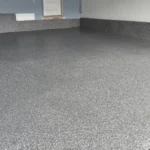
Anti-slip flooring uses aggregates, grit, or textured topcoats to improve grip when floors are wet, oily, or smooth.

Terms relating to mixing, applying and installing coatings
Anti-slip flooring uses aggregates, grit, or textured topcoats to improve grip when floors are wet, oily, or smooth.
Cure time covers the stages from tacky, to walkable, to full cure, and it changes with product and temperature.
Back rolling is rolling over freshly poured or sprayed coating to spread it evenly and smooth out marks.
Coverage rate is how much surface area a gallon of coating covers at the thickness needed for the job.
Line striping is the process of painting or coating parking spaces, traffic lanes, and safety markings onto a floor or lot, usually the last step after a coating job.
Kick time is the point in a two-component coating’s cure cycle when the mixed material starts to thicken and set up, signaling the working window is closing.
Shore hardness measures a cured coating’s resistance to indentation using a handheld durometer, expressed on a Shore A or Shore D scale.
A pull-off adhesion test measures how strongly a coating is bonded to its substrate by pulling a glued test dolly off the surface with a calibrated tester.
Induction time is the waiting period after mixing a two-part coating and before applying it, giving the chemical reaction time to properly begin.
Dynamic Coefficient of Friction, or DCOF, measures how slip resistant a floor is while someone is actually walking on it, using a wet testing method that has replaced older static friction standards.